



Non-stunned Halal
Sourced from sustainable UK farms
Temperature-controlled Woolcool packaging
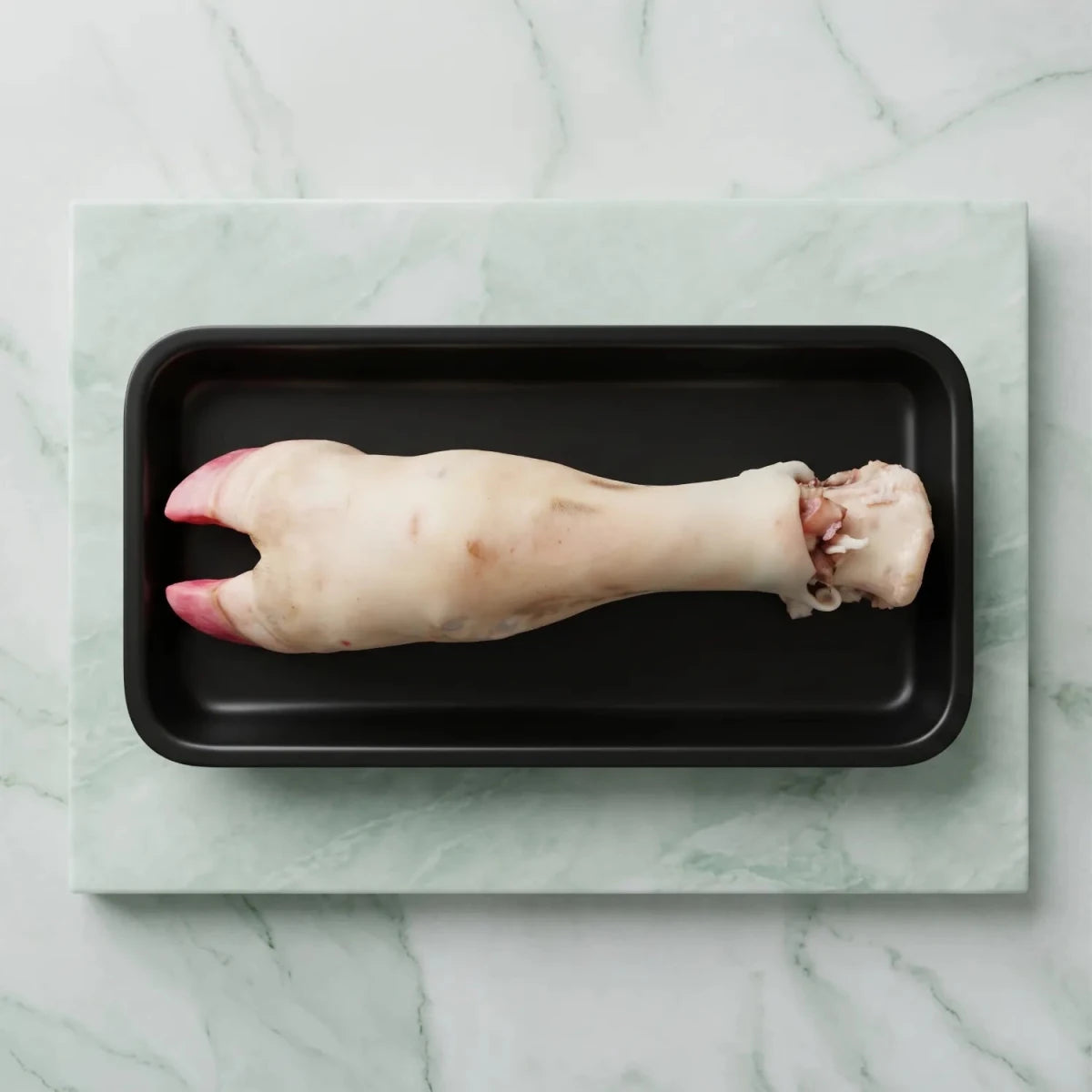
Fresh Halal British Beef Feet, sold as paya, are trotters with a single ingredient — beef feet, no fillers. Certified Halal, they come whole or diced into 10-15g, 25-30g or 50-60g pieces, ready for the long, gelatinous simmer paya, nihari and trotter soup need.
How Beef Paya Is Cut
Each foot is cut to order — whole, or diced into 10-15g, 25-30g or 50-60g pieces — and supplied one paya at a time.
Pick the finer dice for a quick nihari base; the whole foot or 50-60g chunks hold their shape through a longer braise.
Cooking Beef Paya
Paya rewards patience: a trotter karahi or nihari wants a long, gentle simmer that breaks the collagen into a thick, sticky gravy.
Give the feet 12 hours to defrost in the fridge before their first simmer, then blanch and scrub before they go into the pot.
Halal Sourcing
Every trotter comes from cattle slaughtered by the non-stunned method, Antibiotic-free and Growth hormone-free, and produced in the UK.
Is Beef Paya the Same as a Beef Trotter?
Paya is just the South Asian name for the beef trotter — the same foot, whether you order it whole or diced to 50-60g pieces for a slower braise.
Paya is ordered by the piece, not by weight — plan on one whole foot, or its diced equivalent, per person for a curry or broth.
Scaling up is simple: add extra paya to the pot for a bigger batch of nihari or karahi, since the dice and whole-foot options grow the same way.
Keep beef paya refrigerated until you're ready to cook it, and give it 12 hours in the fridge to defrost before use.
Once it's thawed, cook it promptly rather than refreezing, and handle it like any other fresh offal cut.
Beef paya is the backbone of karahi, nihari and homestyle trotter curries, and it reduces down into a rich bone broth for soups too.
Both South Asian and Middle Eastern kitchens reach for the whole foot or diced paya to build slow-cooked, collagen-rich stews.
- Beef Paya Karahi: simmer the whole foot or 50-60g dice in a spiced tomato karahi until the gravy goes thick and sticky.
- Paya Nihari: the 10-15g dice reduces faster, so slow-cook it overnight into a silky, gelatinous broth.
- Trotter Bone Broth: simmer the 25-30g dice down into a rich stock for soups and gravies.
Does beef paya really need a long, slow cook?
Most paya dishes do — a karahi or nihari wants several hours of gentle simmering to soften the collagen into a proper thick gravy.
Can I cook paya faster instead?
Yes: the 10-15g dice reduces quicker than the whole foot or 50-60g chunks, so reach for it when you're short on stove time.
What goes wrong if you rush it?
Rushed paya stays tough and the broth stays thin, because the collagen in the whole foot and larger dice needs time to break down properly.
How do you know when paya is ready?
The gravy turns thick and sticky and the meat pulls easily from the bone, whichever dice size or the whole foot you started with.