



Non-stunned Halal
Mature grass-fed UK sheep
Temperature-controlled Woolcool packaging
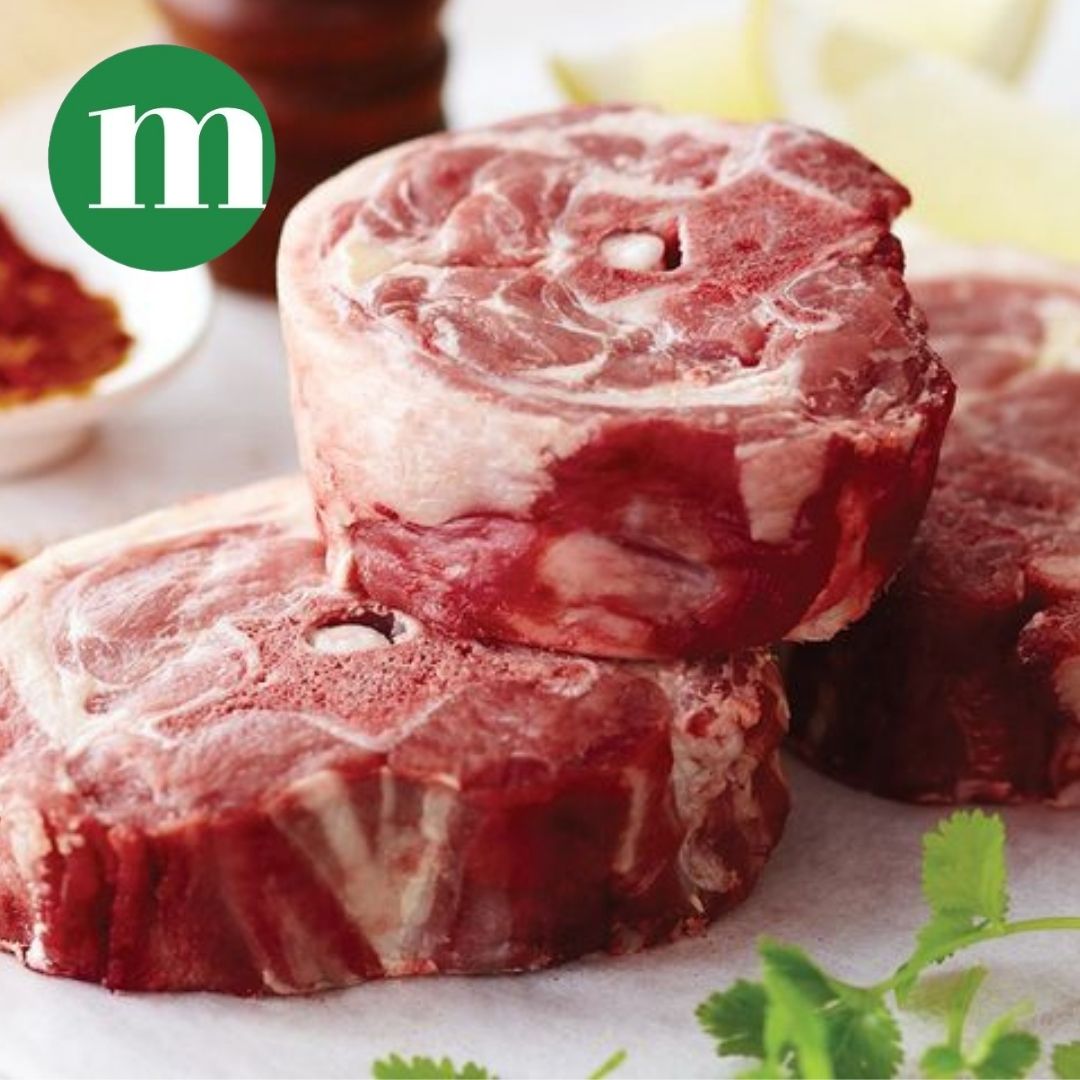
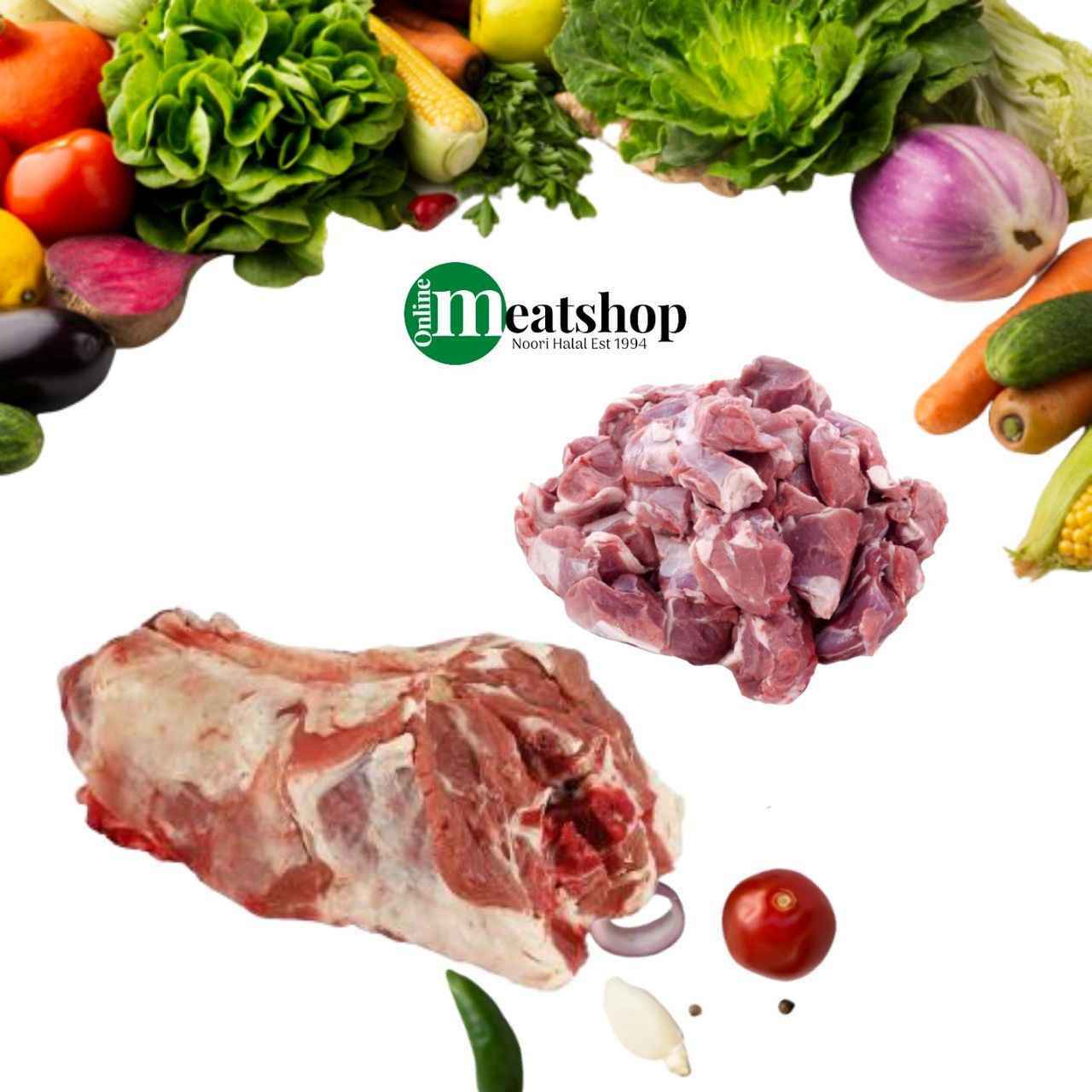
Whole mutton neck comes from a mature sheep, giving it a deeper, richer flavour than lamb neck develops. This mutton neck is Certified Halal and produced in the UK, cut into dice or chunks built for slow, low-and-slow cooking — curries, nihari, stews — where the connective tissue melts into a rich, clinging sauce.
What's in whole mutton neck?
There's nothing else in the pack — just 100% British mutton neck, no fillers, no additives. The neck primal carries a marbling of fat and plenty of connective tissue, exactly what you want for a pot that runs long and low rather than a quick grill.
Is mutton neck the same as lamb neck?
No. Mutton comes from a sheep over a year old, while lamb is younger — that extra maturity is what gives mutton its deeper, more savoury flavour and firmer bite, and it's why nihari and other slow-cooked sheep curries are traditionally built on mutton rather than lamb neck. This neck is produced in the UK, slaughtered by the non-stunned method, from animals reared Antibiotic-free and Growth hormone-free, and supplied in packs from 500g to 4kg.
How is whole mutton neck cut?
Choose diced 10-15g, diced 25-30g, diced 50-60g, or chunked 160-180g pieces, and match the size to the dish — smaller dice for a faster curry, the bigger chunks for a longer nihari-style braise. Every option comes Fat-On or Fat-Off, in 500g, 1kg, 2kg or 4kg packs.
Think in packs, not pieces: a 500g pack covers one or two curry servings, 1kg to 2kg fills a family-sized nihari pot, and the 4kg pack is there for batch-cooking or filling the freezer.
Keep this mutton neck refrigerated and use it within a few days of the day it arrives, or move it straight to the freezer for longer storage. Defrost it fully in the fridge before cooking, and once thawed, cook it rather than refreezing it raw.
Typical values per 100 g (raw):
| Energy | 716 kJ / 171 kcal (converted at 4.184 kJ per kcal) |
|---|---|
| Protein | 20 g |
| Fat | 10.2 g |
Basis: untrimmed mutton shoulder, diced or in strips - "Mutton, boneless dice or strips, shoulder, untrimmed, raw" (recipe-calculated from analysed components, not directly analysed). Reference: Australian Food Composition Database, Release 3.0, Food Standards Australia New Zealand (FSANZ), Public Food Key F005983. Based on Australian data.
Mutton neck is the classic base for nihari, the slow-simmered stew built on collagen-rich cuts. It also earns its place in haleem, mutton curry, yakhni-style stock, and other rustic mutton stews built around a long, low braise.
Mutton Neck Nihari
Brown the diced neck first, then let it simmer low with whole spices for a few hours until the meat is fork-tender and the stock reduces to a thick gravy.
Slow Neck Chunks
Sear the 160-180g chunks, then braise them in a spiced tomato base until the connective tissue has fully broken down.
Mutton Neck Stew
Use the smaller 10-15g or 25-30g dice for a quicker stew — brown first, then add root vegetables for the last hour.
Does mutton neck need browning before it goes in the pot?
Yes — searing the diced or chunked neck in its own fat before adding liquid builds a deeper base flavour for nihari, haleem or stew, and helps the connective tissue render evenly as it slow-cooks.
What happens if you skip the browning step?
The neck still turns tender over a long, slow simmer, but the finished dish loses the caramelised depth that browning adds, especially in gravy-based curries like nihari.
Does the cut size change how you brown it?
Smaller dice — 10-15g or 25-30g — browns quickly and can catch if left too long, while the 160-180g chunks take a longer sear and build more colour before the liquid goes in.
How do you know the browning is done right?
Look for a deep, even brown crust on the mutton neck pieces with no grey, steamed-looking patches — that colour is what carries through into the finished sauce.