



Non-stunned Halal
Sourced from sustainable UK farms
Temperature-controlled Woolcool packaging
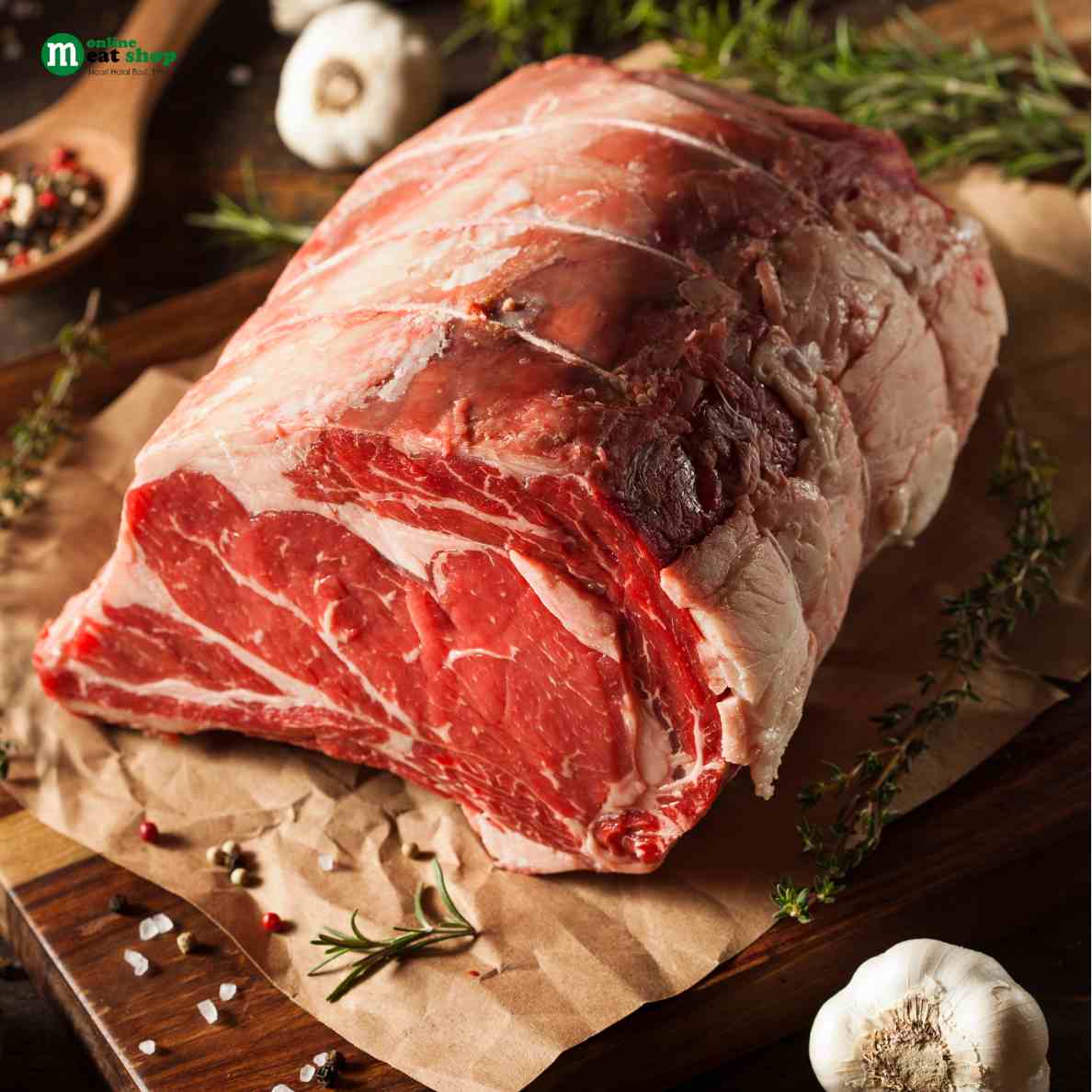
This fore rib is the bone-in beef rib from British Angus cattle — the same primal that gives you a classic Cote de Boeuf. It's 100% Beef with no additives, Certified Halal, and cut either as a Thin Steak for searing or a Single Rib joint for roasting.
Is fore rib the same thing as short ribs?
Not quite — despite the similar name, they come from different parts of the carcase and cook in different ways. Short ribs sit lower down, carry more connective tissue, and want a long, slow braise. This fore rib is the upper rib, built for roasting and steaks: a 550-650g Thin Steak for a quick pan-sear, or a 950-1100g Single Rib for a bone-in roast in the oven.
What cutting styles and pack sizes can you order?
The fore rib is cut to order as a Thin Steak (550-650g), ideal for a fast sear, or a Single Rib (950-1100g) for a slower roast that feeds the table. Packs run from 500g, 1kg up to 2kg, covering the full 500g-2kg range for this cut, so you can pick the exact weight your steak night or Sunday roast needs.
How is the fore rib halal sourced?
Every animal is slaughtered by the non-stunned method, with the cattle reared Antibiotic-free and Growth hormone-free throughout. That sourcing standard holds whichever cut you choose — Thin Steak or the larger Single Rib joint — across every pack size from 500g to 2kg.
Order the Thin Steak (550-650g) for a steak night — it stretches to one hearty portion or two lighter ones. The Single Rib (950-1100g) makes a generous centrepiece for two to three sharing a roast. Order more than one pack from the 500g-2kg range if you're feeding a bigger group.
Keep this fore rib refrigerated until you're ready to cook it, and if you won't get to it right away, freeze it on the day it arrives. Once frozen, thaw it fully in the fridge before cooking — whether that's the Thin Steak or the Single Rib joint — and check it's completely defrosted before you sear or roast.
Typical values per 100 g (raw):
| Energy | 322 kcal |
|---|---|
| Protein | 16.34 g |
| Fat | 27.93 g |
Basis: a whole beef rib (ribs 6-12), lean and fat together. Reference: USDA FoodData Central, "Beef, rib, whole (ribs 6-12), separable lean and fat, trimmed to 1/8" fat, choice, raw" (FDC 168675).
Cut and cooked as the Thin Steak (550-650g), this fore rib is the classic French bistro Cote de Boeuf — seared hard and sliced off the bone right at the table.
As the Single Rib (950-1100g), it becomes a traditional English rib roast, the centrepiece of a proper Sunday dinner with all the trimmings.
For a beef karahi, slice the cooked Thin Steak at home and simmer it down with tomatoes, ginger, garlic and green chillies in a wok-style karahi pan — a South Asian way to use this same rib meat.
Reverse-seared Cote de Boeuf: let the Single Rib (950-1100g) come up to room temperature, roast it low and slow until it's nearly there, then finish with a hard sear in a hot pan or under the grill for a deep crust.
Pan-seared Thin Steak: get the 550-650g Thin Steak hard-seared on both sides in a heavy pan, then baste with butter, garlic and thyme for the final minute.
Bone-in rib for the table: season the Single Rib generously, roast it bone-side down in the tin as one piece, then rest it and carve at the table for a Sunday roast everyone shares.
Can I sear this fore rib and then finish it in the oven?
Yes — reverse-searing suits both cuts: sear the Thin Steak (550-650g) hard in a hot pan for a crust and rest it, or start the Single Rib (950-1100g) low in the oven and finish with a hard sear for colour.
Which cutting style suits the sear-then-oven method best?
The Single Rib (950-1100g) is the better fit — its size holds heat well enough to finish gently in the oven after searing, whereas the thinner Thin Steak (550-650g) can go straight from pan to plate.
What can go wrong when searing then oven-finishing a bone-in rib?
Searing too early on a cold joint is the usual culprit — it stalls the crust. Bring the fore rib to room temperature first, pat it dry, then sear hard before it goes into the oven so the outside browns rather than steams.
How do I know the fore rib is cooked through after oven-finishing?
Use a probe thermometer near the bone rather than judging by time alone, and rest the joint — Thin Steak or Single Rib — before carving so the juices settle.