



Non-stunned Halal
Mature grass-fed UK sheep
Temperature-controlled Woolcool packaging
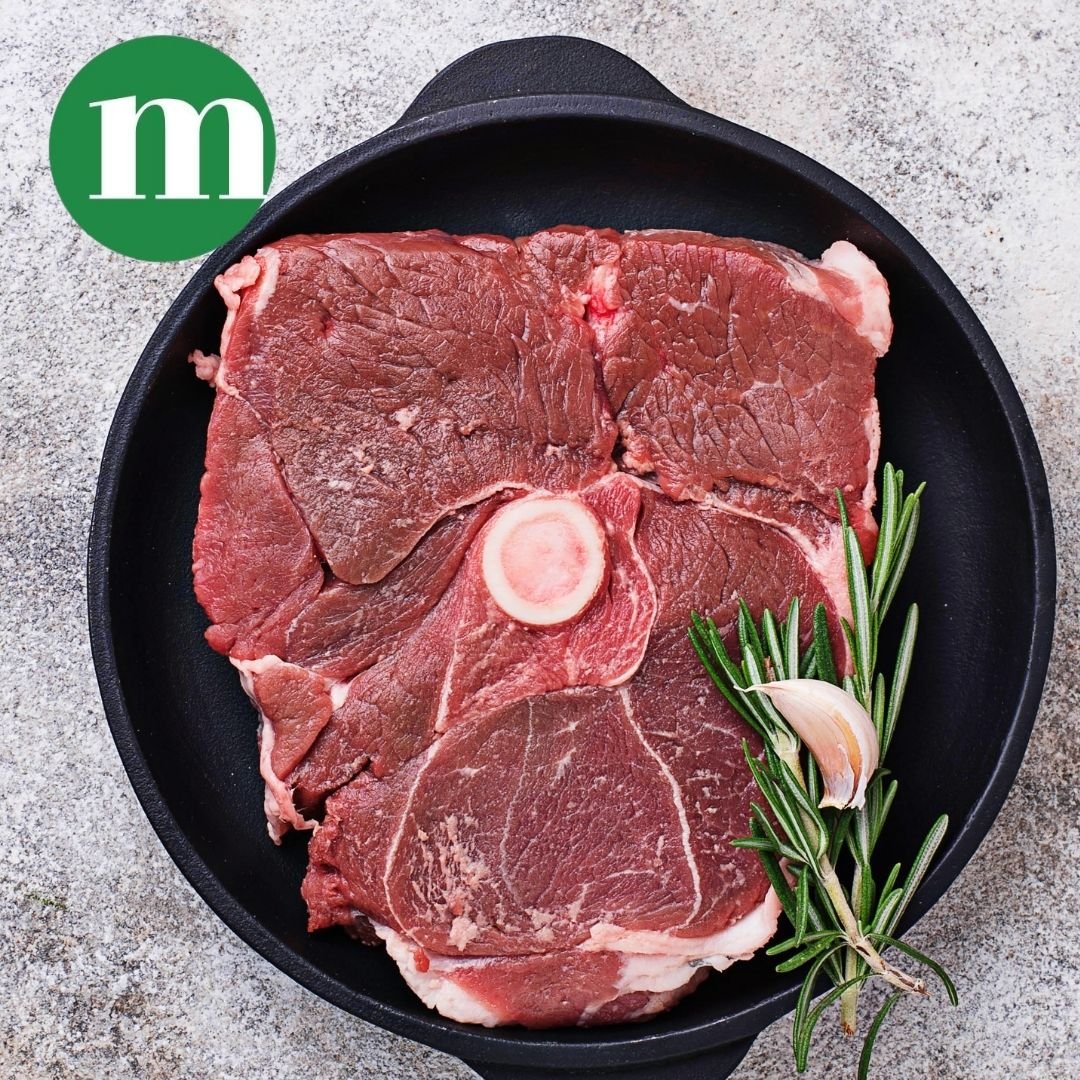
Mutton leg steaks are individual portions cut from the leg, built for quick pan-frying, grilling or griddling rather than a slow braise. This is Certified Halal mutton, produced in the UK and slaughtered by the non-stunned method. Steaks arrive Fat-On or Fat-Off, in packs from 500g to 4kg.
Cutting styles and pack sizes
Steaks are cut to 225-250g, 450-500g or 650-750g, finished Fat-On or Fat-Off. Packs run from 500g to 4kg — choose 500g, 1kg, 2kg or 4kg to match the steak size you need.
What exactly is a mutton leg steak?
A leg steak is a cross-cut slice from the leg — not the whole joint, not a stewing chunk. This product is never sold whole, only as individual steaks, portioned at 225-250g, 450-500g or 650-750g. That thickness keeps the leg's close grain cooking through fast, rather than needing a bone-in roast's low, slow heat.
Cooking mutton leg steaks
Pan-fry or griddle over medium-high heat for 3-4 minutes a side, then finish under a hot grill if needed. The same steaks dice well into a quick mutton yakhni, simmered in yoghurt and whole spice until the sauce reduces. Rest briefly before slicing.
Butcher's tip: pat steaks dry before they hit the pan, so they sear instead of steam.
Match pack to portion: a 500g or 1kg pack suits the smaller 225-250g or 450-500g steaks, and the 2kg or 4kg packs cover the 450-500g and 650-750g sizes for bigger orders. Pick steak size and pack weight together so nothing goes spare.
Keep leg steaks refrigerated until you're ready to cook, and use raw meat within a few days of it arriving. If you're not cooking straight away, freeze them — thaw fully in the fridge, then cook promptly once thawed.
Typical values per 100 g (raw):
| Energy | 509 kJ / 122 kcal (converted at 4.184 kJ per kcal) |
|---|---|
| Protein | 21.6 g |
| Fat | 3.8 g |
Basis: the separated lean portion of a mutton leg; the source record is described bone-in, but its lean variant is the trimmed lean meat, so the figures describe boneless leg - "Mutton, roasting piece, with bone, leg, lean, raw" (laboratory-analysed). Reference: Australian Food Composition Database, Release 3.0, Food Standards Australia New Zealand (FSANZ), Public Food Key F005997. Based on Australian data.
Pan-fry these leg steaks on their own, thread them into kebabs, or dice them into mutton yakhni, the yoghurt-based soup a close-grained leg cut suits well. They work equally well on a grilled steak platter with rice or flatbread.
- Rub leg steaks with lemon and cumin, then griddle 3-4 minutes a side and rest before slicing.
- Sear Fat-On steaks hot and hard, finishing with a spiced yoghurt drizzle.
- Dice into a mutton yakhni — simmer in yoghurt and whole spice until the sauce reduces around the meat.
Should you oil the steak or the pan?
Oil the steak, not the pan — rub a thin layer over the meat, then get the pan or griddle hot and dry. It works the same for Fat-On and Fat-Off leg steaks.
What happens if you oil the pan instead?
A heavily oiled pan tends to smoke before the steak sears, and the oil pools rather than coating the meat evenly, so patches stick. Oiling the steak first gives a more even crust on a 225-250g, 450-500g or 650-750g steak.
How do you know the pan is hot enough?
Drop in some water — if it sizzles and vanishes instantly, the pan is ready; add the oiled steak straight after so it sears instead of steams.
Why does a leg steak stick to the pan?
Usually the pan wasn't hot enough, or the meat went in too soon after oiling. Let the oiled steak sit a minute at room temperature and let the pan come fully up to heat first.